News from Nordic Road & Transport Research

News from Nordic Road & Transport Research

If your newsletter looks strange, please click here.

News from Nordic Road & Transport Research

To Nordic's website | Share this message | Subscribe

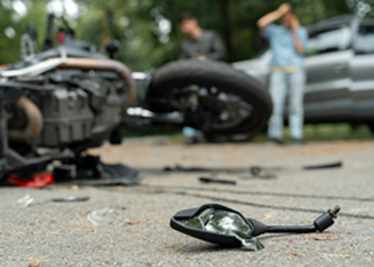
Motorcycle accident. Photo: Shutterstock.com

High Risk for Young Riders of Light Motorcycles

Young riders of light motorcycles face a 36 times higher risk of being killed or seriously injured in traffic compared to young car drivers, according to new research from the Institute of Transport Economics (TØI).

More about light motorcycles

Pushing sos button in car. Photo: Adobe Stock

Safety impact of eCall in Finland

A study by VTT for the Finnish Transport and Communications Agency found modest safety effects for eCall in Finland, with about one life saved to date and an estimated 10 by 2035. The result is affected by system penetration and the tendency for accidents to be reported quickly even without automatic notifications.

More about eCALL

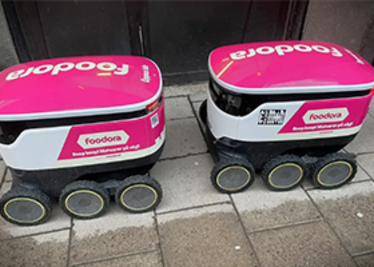
A cute – or perhaps annoying – feature in the cityscape? Photo: Daniel Rudmark

VTI reviews robots for deliveries in Stockholm

How do autonomous delivery robots interact with people in real-world traffic environments and what rules are needed to control the robots’ progress? These are the main research questions in two projects in which the Swedish National Road and Transport Research Institute (VTI) is playing an important role.

More about robots

Magnus Nylin at the Swedish Air Force Museum in Linköping. Photo: Elsa Bolling Landtblom

Looking up: Aviation is a growing VTI research area

VTI’s aviation research is really taking off. Since the beginning of September, the wind between its wings has been a genuine aviation enthusiast who is keen to further develop the organisation. “VTI has unique and broad expertise,” Magnus Nylin says and points out the areas that will be most important in the coming years.

More about aviation

Dangerously slippery street in Finland. Photo: Janne Skinnarla/Mostphotos.com

Bio-binders in asphalt in Iceland

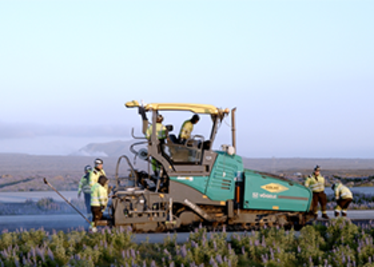
Bio-binders are carbon negative additives that can be mixed with bitumen and are a promising way to reduce carbon footprint in the road industry. Colas Iceland has delevoped products using bio-binders for a few years with good results, offering products with up to 25% lower carbon footprint.

More about bio-binders

Methodology Clinics support the practical application of EU-CEM in CCAM impact assessments. Photo: Scott Graham/Unsplash

Support available for EU-CEM users

Planning to evaluate Connected, Cooperative, and Automated Mobility (CCAM) services, or to fund an impact assessment? The European Common Evaluation Methodology for CCAM (EU-CEM) provides a structured approach which bases on lessons learned and best practices. Evaluation experts of the CCAMbassador project offer Methodology Clinics to help users apply EU-CEM effectively in their projects

More about EU-CEM

Johan Olstam and Kinjal Bhattacharyya. Photo: VTI

VTI part of CCAM EU project on future infrastructure

Can tomorrow’s smart infrastructure create safer, more efficient and more sustainable traffic for everyone? While research and development is ongoing and making rapid progress, as yet the answer is undetermined. It depends.

More about EU project

Nordic Wants to Highlight

We are now on Linkedin! Follow our page and keep yourself updated on recent news!
Click here to get to our Linkedin page

Nordic Road and Transport Research – a collaboration between public road
and transport research organisations in the Nordic countries
SE-581 95 Linköping | Phone + 46 13-20 43 32 | nordic@vti.se 

Share | Unsubscribe