|

|
|
The library is currently undergoing some organisational changes. As reported on Inslaget, from 1 May Marie‑Louise Eriksson has been appointed acting library director and Ann Dyrman as acting deputy library director (50 %). Both Marie-Louise and Ann are long-standing members of the library staff. Until now, they have served as coordinators of the library’s teaching group and research support group, respectively.
The former library director, Jörg Pareigis, has returned to his position as senior lecturer in Business Administration at Karlstad Business School. Recruitment of a permanent library director will begin during the autumn semester.
We are also in the process of making some minor adjustments to the library’s organisational structure. We will do our utmost to ensure that these changes do not negatively affect the support we provide to you as researchers.
In other news, we welcome that KAU has got a new publishing policy, replacing the old one from 2014. The new policy is also assisted by guidelines, outlining in more detail important aspects of scholarly publishing. Read more about this, and more, below.
As always, it has been great collaborating with you this semester. I and we hope that you can look forward to a nice and relaxing summer.
|
|
|
|
|
|
|
|
|
|
In 2014, KAU adopted a policy for scholarly publishing that has remained in effect since then. However, the publishing landscape has changed profoundly over the past decade. Open access, open science, generative AI, and an increased emphasis on research integrity are among these developments.
The Vice-Chancellor Jerker Moodysson has now approved a new publishing policy, accompanied by guidelines that elaborate on key aspects of its implementation. The policy and guidelines are centred on five core principles: Integrity, Openness, Quality, Visibility, and Control.
Back to top
|
|
|
|
|
|
|
|

|
|
As an author of an open access KAU publication, e.g. a licentiate or doctoral thesis, you retain copyright to your work. To inform users of your work what they can do with it, Creative Commons (CC) licenses help.
In line with KAU's new policy and guidelines for scholarly publishing (see news item above) which state that KAU publications should be published under open licenses, you are now strongly encouraged to add a CC license to your work.
More information on what this means for you as author can be found here.
Back to top
|
|
|
|
|
|
|
|

|
|
Version 14 of NVivo has been discontinued on 31 May and replaced by version 15, which is now available via our installation services.
Windows users can install it through the new Company Portal (search for 'Company Portal' or 'Företagsportal' in the taskbar). Mac users should use Self Service.
Users affected by this change have received an email with instructions and are asked to uninstall version 14 before installing version 15.
If you need assistance, please email 2525@kau.se.
Back to top
|
|
|
|
|
|
|
|
|
|
|
|
On 10 April, the new national resource for open educational resources (OER), Grena.nu, was launched. OER are defined as learning, teaching and research materials that have been released under an open license, which means it is free to use for anyone.
Grena.nu is a database indexing OER's, but it is also a platform for learning more about OER, for example how you as a researcher can develop and share OER's built on your research.
Back to top
|
|
|
|
|
|
|

|
|
Bifrost is a tool for analysing research publications. Ever wondered what that means and how different types of such analyses might look like? Descriptions and such examples have recently been added to the website. Take a look!
Interested and want to hear more, perhaps use it for analysis of your research interests? Contact Kristian Niemi, the developer of Bifrost and Senior Lecturer and Head of Subject at Religious Studies. He is working part time at the University Library to continue developing the tool and to help you use it!
|
|
|
|
|
|
|
|

|
|
Peer review is a central method of quality assurance used throughout the scientific community. Despite its crucial role in research, the peer review process is, to a large extent, characterised by tacit knowledge. This form of knowledge is passed on and acquired through practice rather than through formal training or regulations.
In this seminar, we will take a closer look at the peer review process. Drawing on examples from academic publishing, research funding applications, and recruitment procedures, we will highlight the characteristics of a well-conducted peer review, while also discussing the challenges and issues associated with the method.
Place: Zoom
Date and time: 21 October 2026, 10.00
Organiser: Karlstad University’s taskforce for CoARA
Contact: Magnus Åberg, University Library.
More details about the webinar will be published in this newsletter and on the library web pages after the summer.
Back to top
|
|
|
|
|
|
|
|
 |
|
The preprint platform arXiv is banning researchers from posting their manuscripts on the platform for one year if a submission is found to contain references that have been hallucinated by artificial-intelligence tools, reports Nature.
Back to top
|
|
|
|
 |
|
Researchers that want to use AI tools for research purposes, need to be able to trust that the tools meet research-grade criteria. Research-grade AI, argues this article from Research Information, refers to AI systems purpose-built for research workflows, grounded in trusted content, designed with responsible functionality, and built to support – not replace – human judgment.
Learn more here about the three pillars of research-grade AI: trusted content, responsible functionality, and human-in-the loop.
Back to top
|
|
|
|
|
|
|
|
|
|
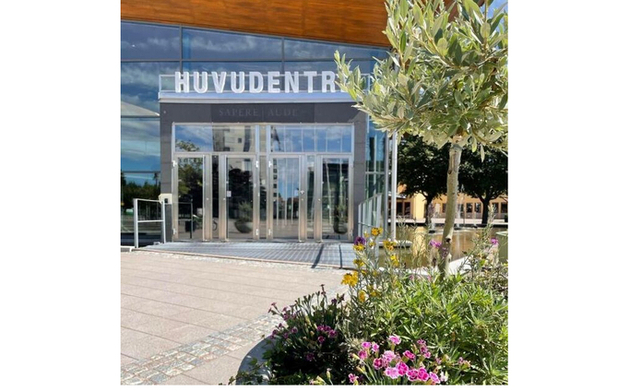
From June through August the opening hours of the library will be changed. Read more about these changes here.
Also, our support to you as researchers will be reduced during the last two weeks of July. This means we will take a bit longer to respond to incoming mail. For pressing matters during this time, please contact biblioteket@kau.se.
Photo credit: Mas Karin Gustafsson
|
|
|
|
|
|
|
|
|
|